Attorney General of India
Also: Attorney General, AG, Article 76
Background and evolution
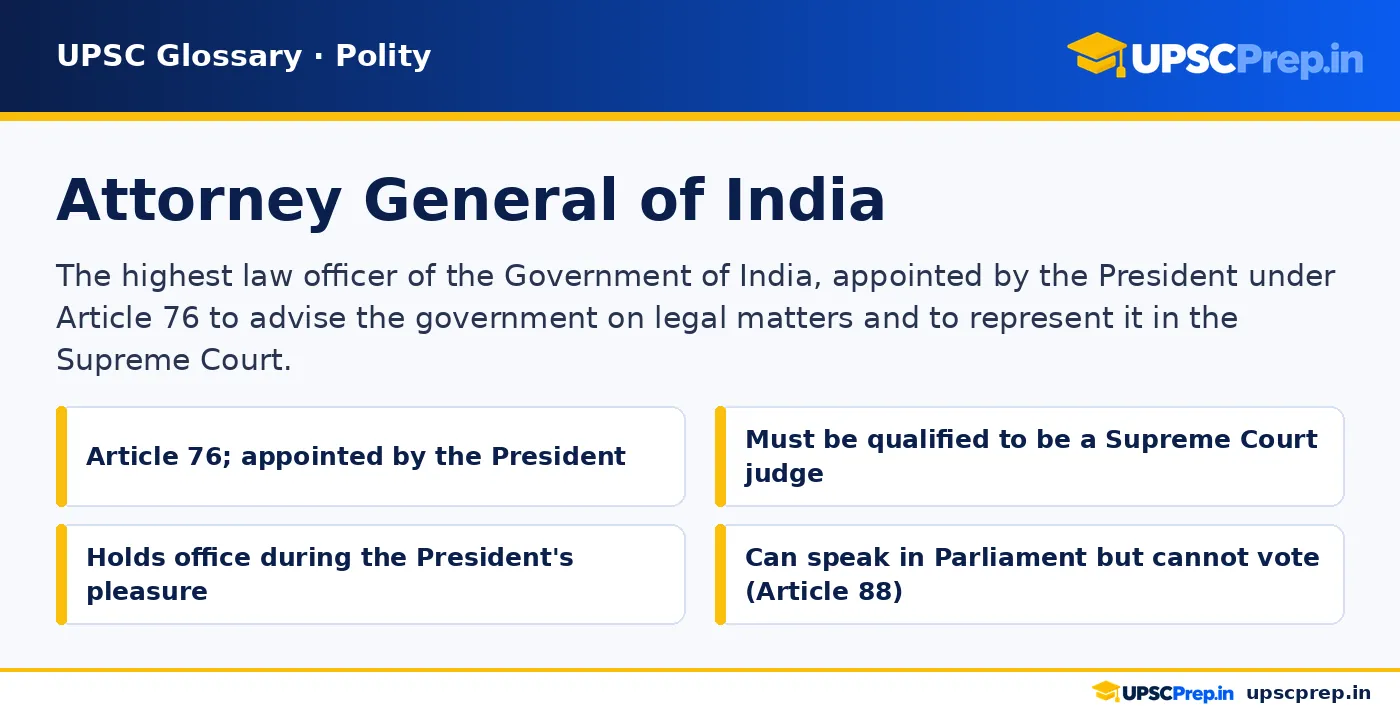
The office has British roots, where the Attorney General is the chief legal adviser of the Crown. In India, the Constitution created the post in Article 76 and gave it a unique status: the Attorney General is not a member of the Cabinet or of Parliament, yet has a right to speak in both Houses and their committees. The first Attorney General, M. C. Setalvad, served from 1950 to 1963 and also chaired the first Law Commission of independent India.
Over time, the office has been at the centre of major constitutional cases, from the Emergency-era habeas corpus case to the electoral bonds and Article 370 cases. Its advice can shape government policy, and its stance in court can influence outcomes.
Key features and provisions
- Appointment: by the President; the person must be qualified to be appointed a Supreme Court judge.
- Tenure: not fixed by the Constitution; holds office during the pleasure of the President; usually resigns when the government changes.
- Remuneration: fixed by the President.
- Duties: advise the Government of India on legal matters referred, perform legal duties assigned by the President, appear in Supreme Court cases and in references under Article 143, and appear in High Courts when needed.
- Rights: right of audience in all courts in India; right to speak in Parliament and its committees without a vote; enjoys the privileges of a member of Parliament.
- Limits: may not advise or hold briefs against the Government of India, and may not defend accused persons in criminal cases without permission.
- Contempt role: a private person needs the Attorney General's consent to start criminal contempt proceedings in the Supreme Court.
You've read your 3 free glossary pages this month
Create a free account to read 5 full pages a month, or upgrade for unlimited access. The definition above, the A–Z index and the pop-up definitions in lessons stay free.
Last reviewed: 23 October 2026 · Original UPSCPrep.in content.