Mizo Accord
Also: Mizoram Peace Accord, Memorandum of Settlement 1986
Background and evolution
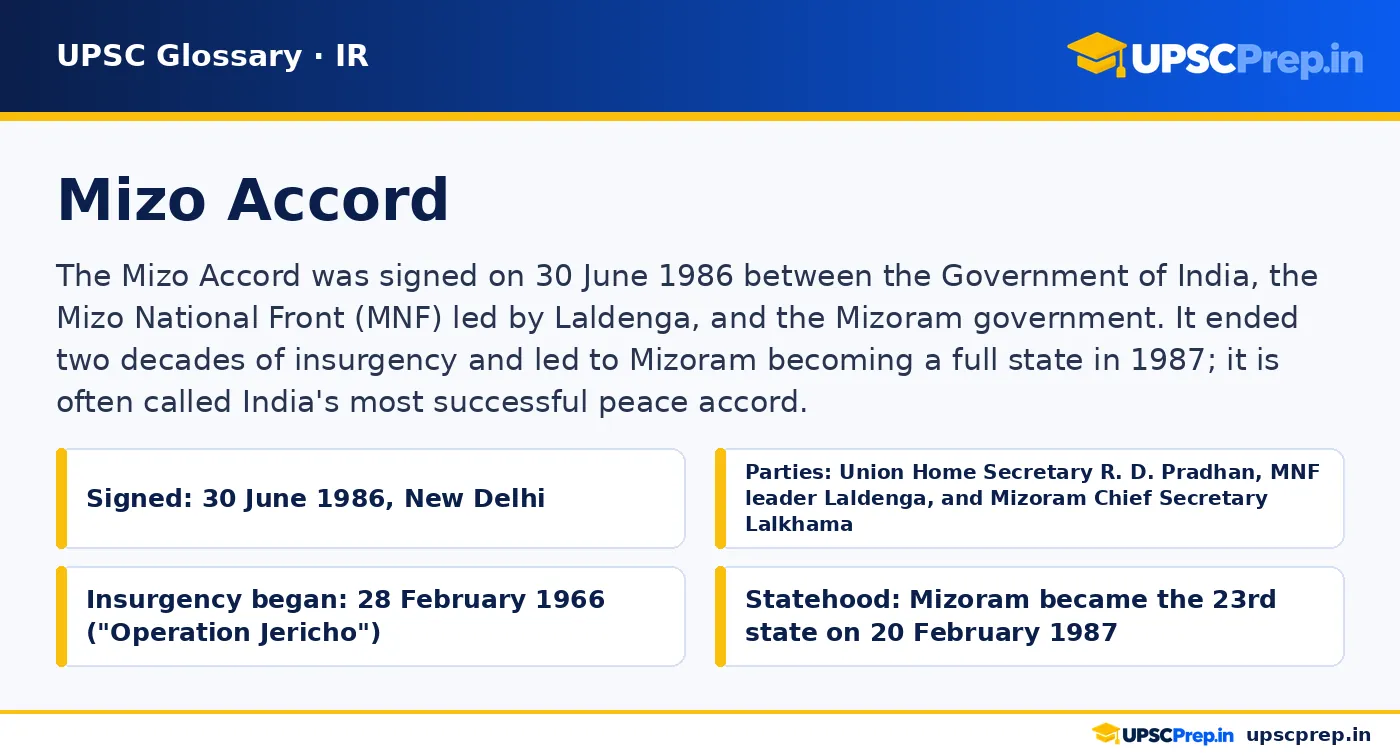
The Mizo Hills were a district of Assam after independence. A severe famine in 1959–60, known as "mautam," caused by bamboo flowering that led to a rise in rats and crop destruction, created anger over the slow response of the Assam government. The Mizo National Famine Front became the Mizo National Front under Laldenga and turned to armed struggle for independence.
In 1966, the MNF seized several towns. The Indian Air Force carried out air strikes on Aizawl, the only time Indian aircraft have been used against its own territory. In the following years, villages were regrouped into protected settlements to cut off support for insurgents, causing great hardship. Mizoram became a Union Territory in 1972. Talks with the MNF started in the mid-1970s, broke down several times, and succeeded after Rajiv Gandhi's government resumed negotiations in 1985.
Key features and provisions
- Surrender of arms: the MNF agreed to give up violence, surrender weapons and return underground personnel to normal life.
- Statehood: Mizoram was to become a state with its own legislature.
- Article 371G: Parliament's laws on Mizo religious and social practices, customary law, and ownership and transfer of land apply only if the state assembly so decides.
- Rehabilitation: support for returning insurgents.
- Inner Line Permit: the existing permit system under the Bengal Eastern Frontier Regulation, 1873, was retained.
You've read your 3 free glossary pages this month
Create a free account to read 5 full pages a month, or upgrade for unlimited access. The definition above, the A–Z index and the pop-up definitions in lessons stay free.
Last reviewed: 23 October 2026 · Original UPSCPrep.in content.