GS2 › Polity and the Constitution
Revision note: Fundamental Rights, Directive Principles and Duties
- Art. 32 = "heart and soul" (Ambedkar); Art. 226 = High Court writs
- Art. 20 and 21 survive an emergency; Art. 21A by the 86th Amendment
- DPSP Art. 36–51 (non-justiciable); FDs Art. 51A (11 duties)
Fundamental Rights at a Glance
Six categories of Fundamental Rights in Part III (Articles 12–35).
What are they?
Fundamental Rights are in Part III (Articles 12–35) of the Constitution. They protect citizens against arbitrary State action and are justiciable – you can go to court if they are violated.
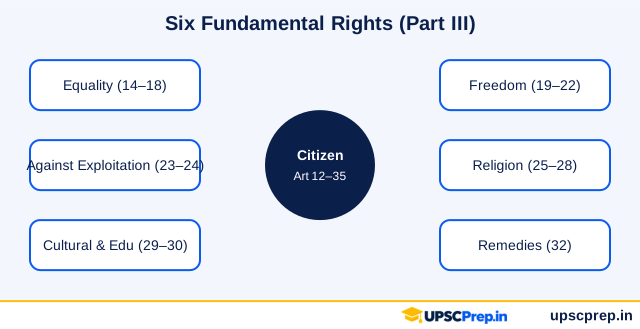
The six rights
- Right to Equality (Art. 14–18)
- Right to Freedom (Art. 19–22)
- Right against Exploitation (Art. 23–24)
- Right to Freedom of Religion (Art. 25–28)
- Cultural and Educational Rights (Art. 29–30)
- Right to Constitutional Remedies (Art. 32) – Dr. B.R. Ambedkar called it the "heart and soul" of the Constitution.
Remember
- The Right to Property was removed from Part III by the 44th Amendment (1978); it is now a legal right under Art. 300A.
- Art. 20 and 21 cannot be suspended even during a National Emergency (44th Amendment).

Source: https://upscprep.in/upsc/gs2/polity-and-the-constitution/fundamental-rights-directive-principles-and-duties/ · UPSCPrep.in